By Heather Hall Galle

Photography by Afrik Armando
By the time a pitch reaches an editor’s inbox, most of the important decisions should already have been made.
One of the questions I am asked most often is: Where should we pitch this?
It is an understandable place to start. A creative team has finished a project, the photographs have arrived, and everyone wants to know where the work belongs. But the outlet is rarely the first question I ask. Sometimes it is not even the second.
First: What is the story? Why does it matter? Who needs to see it? And what do we actually want that attention to make possible?
At Eight Days – Week, those questions come before the media list, the subject line, or the press release. They help us determine whether there is a story at all and, if there is, what form it should take.
Sometimes the answer is a media pitch. Other times, it is a founder’s point of view, a clearer website narrative, a more disciplined edit of a photo gallery, or an idea better explored on the brand’s own platform. Occasionally, the right decision is to wait. The story may need more context, stronger visual proof, or the perspective that only time can provide.
And sometimes the most strategic choice is not to share something at all.
That is editorial strategy.
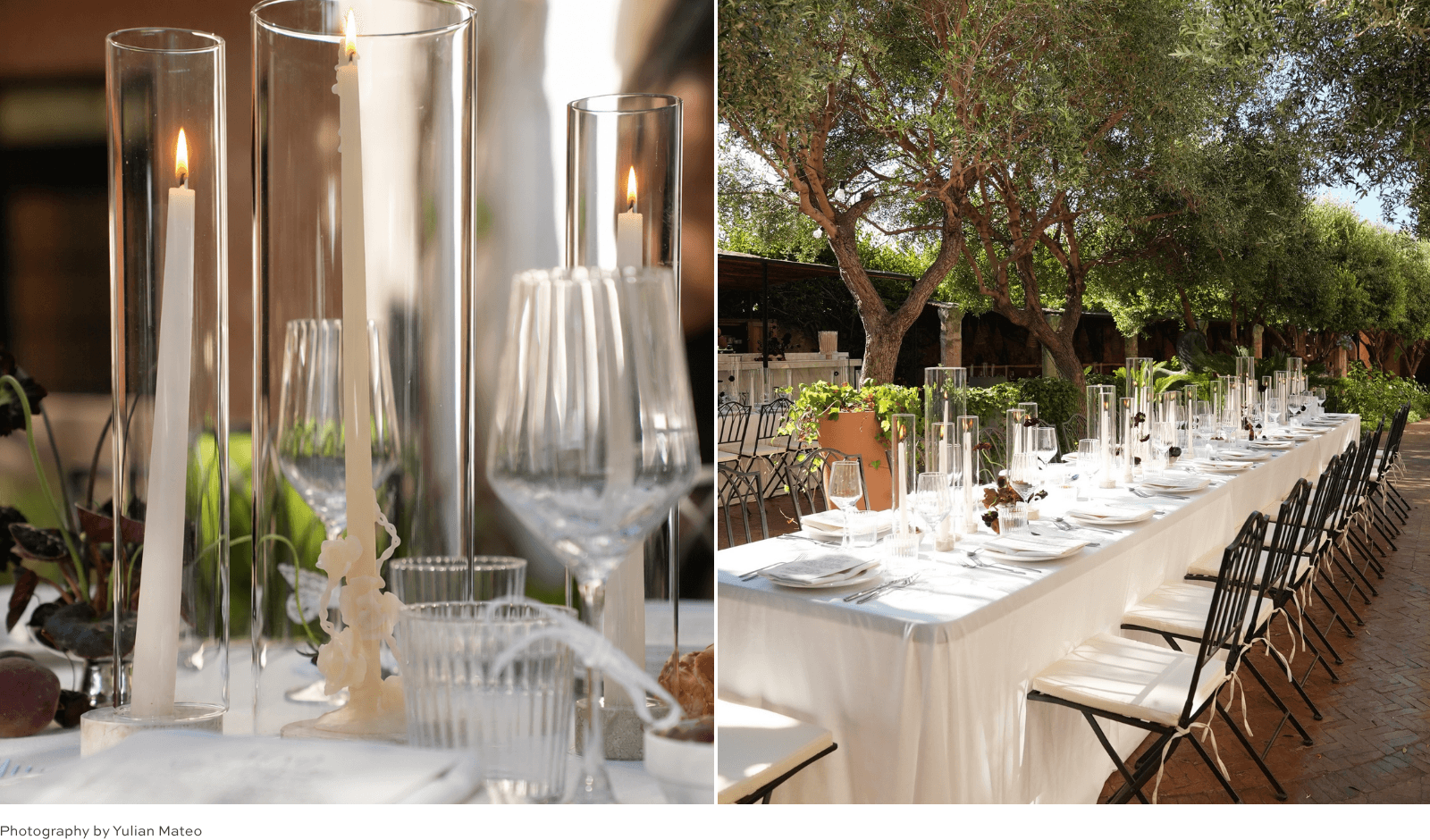
Photography by Yulian Mateo
A beautiful project does not automatically contain an editorial story. A good story does not automatically belong in the largest publication willing to consider it. And a press opportunity is not necessarily useful simply because it is available.
The work is in understanding the difference.
For a creative business, editorial strategy starts with association: What do you want people to understand about your work over time? What do you want editors, collaborators, prospective clients, and the larger industry to think of when they hear your name?
From there, each story becomes a decision.
One project may demonstrate a developing point of view more clearly than ten others. A single detail in a wedding may give an editor a reason to care beyond the fact that the photographs are beautiful. A founder may have something useful to say about the way the industry is changing, and that perspective may do more for the company’s position than another finished-project announcement.
The strongest angle is not always the most obvious one.
A wedding may first appear to be a fashion story, but the more compelling idea could be the family history behind the location or the creative process that produced a custom garment. A new body of work may look like an occasion for immediate promotion, when what it really needs is a better edit. A company may believe it needs more press when the larger problem is that its existing visibility has never been organized into a clear narrative.
Editorial strategy requires us to look at the whole picture before deciding which part deserves emphasis.
It is also an exercise in restraint.

Photography by Haute Weddings
I spend almost as much time thinking about what not to pitch, publish, or post as I do developing what should go out. More stories are not always better. More press is not always better. More content is certainly not always better.
Volume can create activity without creating position.
A strong editorial strategy establishes hierarchy. It tells us what deserves the fullest treatment, what needs additional context, what can wait, and what does not need to be said. It also allows different stories to build on one another, so a feature, founder interview, website, social platform, and body of published work begin reinforcing the same larger understanding of the business.
That discernment matters even more now that every company can function as its own publisher. Access to an audience is no longer the most difficult part. The more consequential question is whether a business knows what is worth placing in front of that audience and why.
The final expression may be a Vogue feature, a trade interview, a website paragraph, a founder’s note, a wedding submission, a creative partnership, or a story developed entirely in-house.
The form will change from one project to the next. The thinking that comes before it should remain consistent.
Long before anyone hits send, we should already know what the story is there to do.